
Ana Pattern Dense Fine Speckled
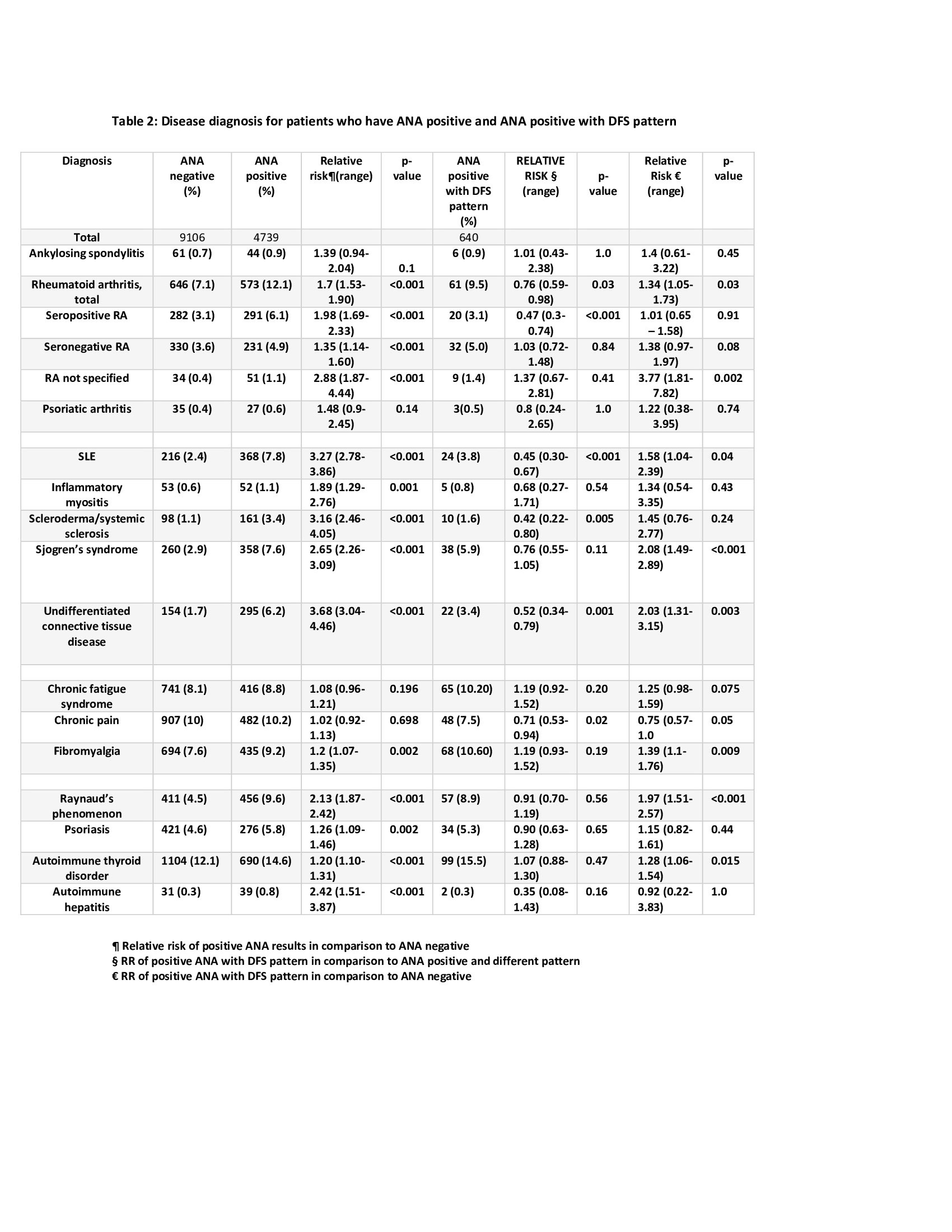
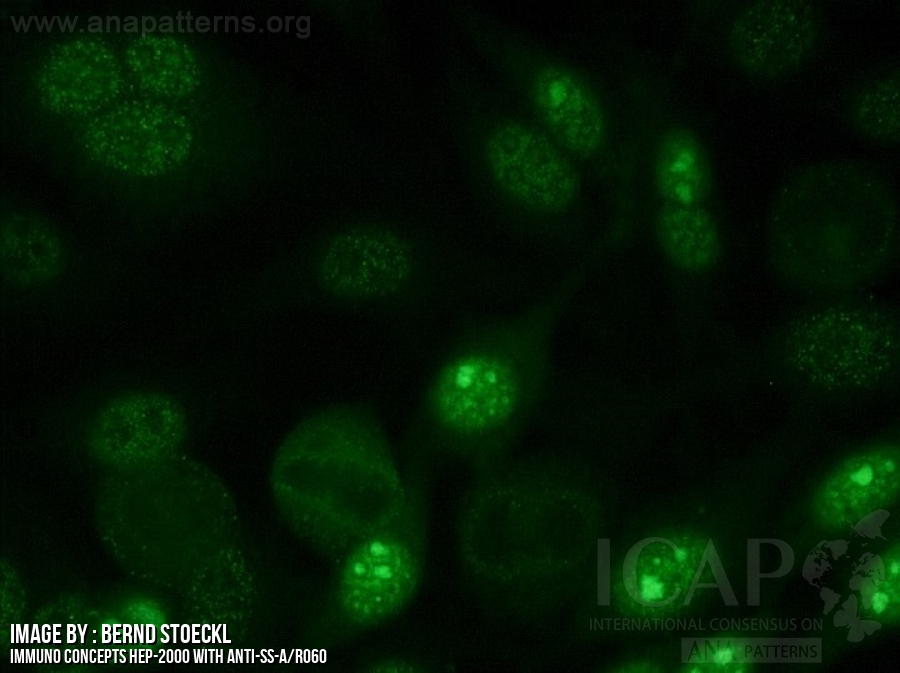
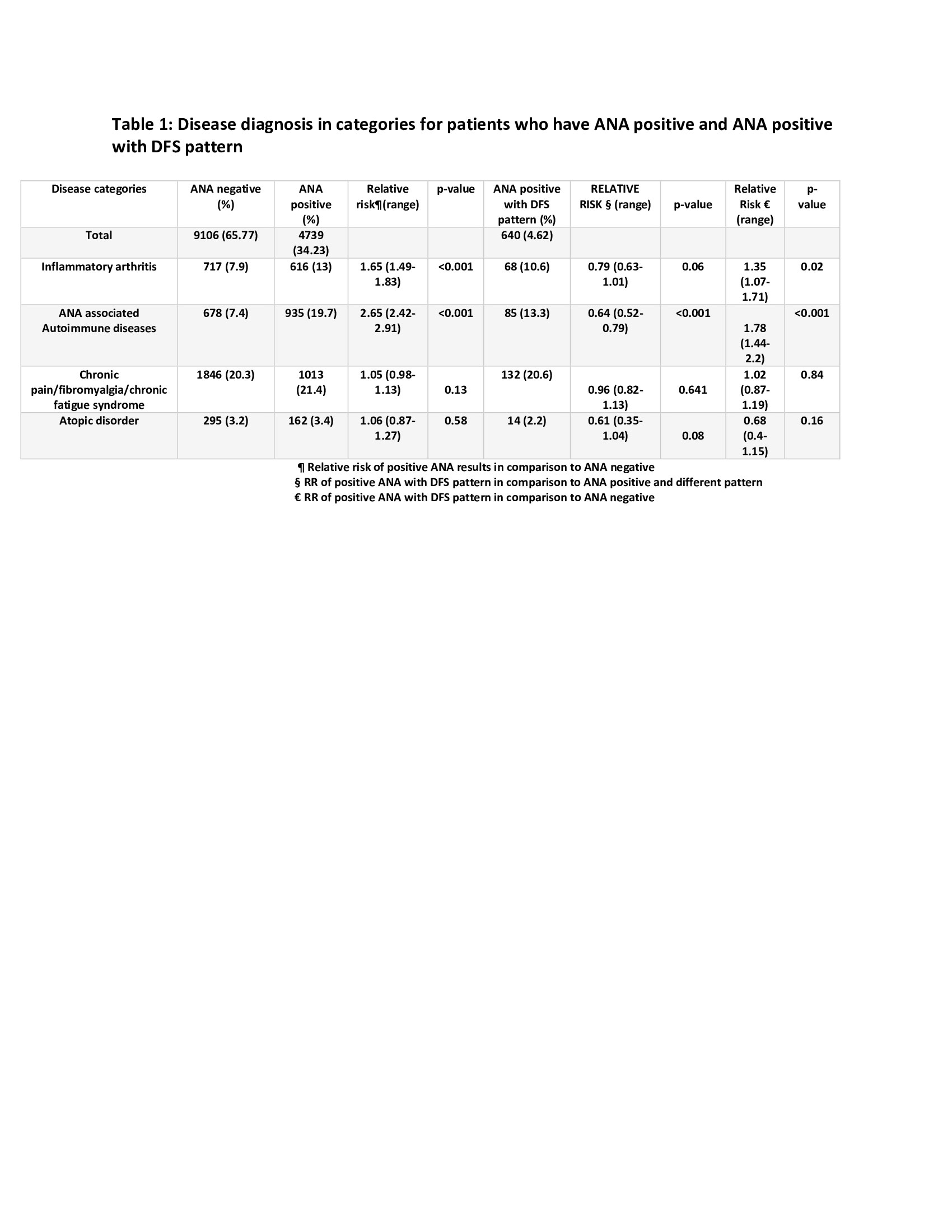
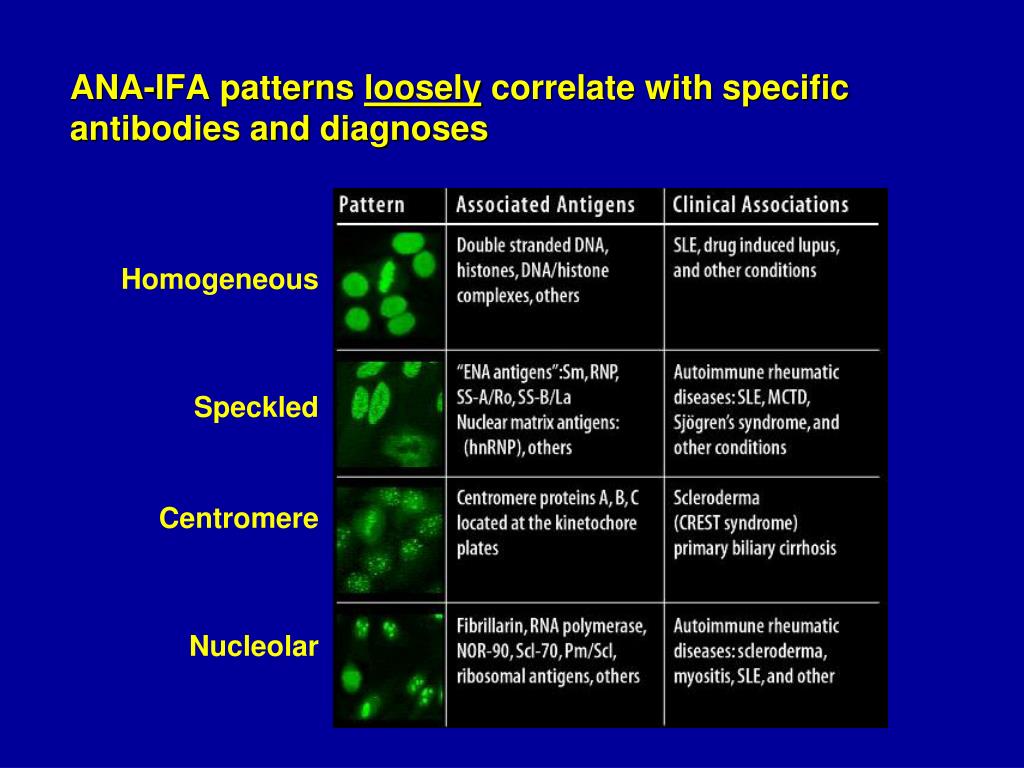
Ana Pattern Dense Fine Speckled - Patterns are indicated according to the recent nomenclature of the international consensus on ana pattern (icap) Web this topic review will cover the three broad categories of ana staining patterns: Identification of a certain pattern can lead to diagnosis of a certain autoimmune disease. Web the two samples with the dense fine speckled (dfs) pattern were recognized with significantly lower accuracy. Ana pattern is most commonly speckled, followed by centromeric and less commonly. Web the characteristic dense fine speckled (dfs) staining pattern of interphase cells is indicated by the red arrow and the strong chromosome staining of metaphase cells by the blue arrow. The 6th icap workshop in 2021 discussed the latest updates and improvements of the icap classification chart, including the dense fine speckled pattern. 9106 (65.8%) had negative ana and 4739 (34.2%) had positive ana by iif (including all patterns). Relative risk (rr) was calculated for diagnostic categories and individual diseases. A speckled pattern may indicate various diseases, including lupus and sjögren’s syndrome. Web the speckled pattern in ana (antinuclear antibody) testing is one of the most common and diagnostically significant patterns, characterized by its distinctive, fine or coarse speckled appearance under a fluorescence microscope. Patterns are indicated according to the recent nomenclature of the international consensus on ana pattern (icap) Common ana pattern is speckled; The 6th icap workshop in 2021 discussed the latest updates and improvements of the icap classification chart, including the dense fine speckled pattern. Relatively high frequency of dfs pattern was observed in autoimmune diseases, contrary to the previous observations that dfs pattern is not related with autoimmune diseases. Web depending on the subtype of ana present in the serum and the targeted antigen, several staining patterns are reported, namely, nuclear patterns, nucleolar patterns, cell cycle patterns, or cytoplasmatic patterns. Web results 13,845 patients with an ana during the study period were identified. Web indirect immunofluorescence (iif) is the most prevalent screening antinuclear antibody test for systemic autoimmune rheumatic disease (sard). Identification of a certain pattern can lead to diagnosis of a certain autoimmune disease. Web the characteristic dense fine speckled (dfs) staining pattern of interphase cells is indicated by the red arrow and the strong chromosome staining of metaphase cells by the blue arrow. Web this topic review will cover the three broad categories of ana staining patterns: Web the dfs pattern is a frequent finding (about 28% of ana positivity) in ana test using indirect immunofluorescence method. Web the characteristic dense fine speckled (dfs) staining pattern of interphase cells is indicated by the red arrow and the strong chromosome staining of metaphase cells. Web results 13,845 patients with an ana during the study period were identified. Web the dfs pattern is a frequent finding (about 28% of ana positivity) in ana test using indirect immunofluorescence method. Web the two samples with the dense fine speckled (dfs) pattern were recognized with significantly lower accuracy. Patterns are indicated according to the recent nomenclature of the. Web results 13,845 patients with an ana during the study period were identified. Within each of these categories, individual patterns will be defined and autoantibodies that produce the. Web depending on the subtype of ana present in the serum and the targeted antigen, several staining patterns are reported, namely, nuclear patterns, nucleolar patterns, cell cycle patterns, or cytoplasmatic patterns. 9106. Common ana pattern is speckled; Web the speckled pattern in ana (antinuclear antibody) testing is one of the most common and diagnostically significant patterns, characterized by its distinctive, fine or coarse speckled appearance under a fluorescence microscope. Web the characteristic dense fine speckled (dfs) staining pattern of interphase cells is indicated by the red arrow and the strong chromosome staining. However, the major challenge was found with the mixed patterns. Web this topic review will cover the three broad categories of ana staining patterns: Within each of these categories, individual patterns will be defined and autoantibodies that produce the. Web depending on the subtype of ana present in the serum and the targeted antigen, several staining patterns are reported, namely,. Relative risk (rr) was calculated for diagnostic categories and individual diseases. Within each of these categories, individual patterns will be defined and autoantibodies that produce the. Web the characteristic dense fine speckled (dfs) staining pattern of interphase cells is indicated by the red arrow and the strong chromosome staining of metaphase cells by the blue arrow. Relatively high frequency of. A speckled staining pattern means fine, coarse speckles of ana are present throughout the nucleus. The 6th icap workshop in 2021 discussed the latest updates and improvements of the icap classification chart, including the dense fine speckled pattern. Web indirect immunofluorescence (iif) is the most prevalent screening antinuclear antibody test for systemic autoimmune rheumatic disease (sard). Common ana pattern is. Common ana pattern is speckled; Web the dfs pattern is a frequent finding (about 28% of ana positivity) in ana test using indirect immunofluorescence method. A speckled staining pattern means fine, coarse speckles of ana are present throughout the nucleus. Web human antinuclear autoantibodies (anas) targeting the dense fine speckled (dfs) nuclear protein dfs70, commonly known as lens epithelium derived. However, the major challenge was found with the mixed patterns. Web results 13,845 patients with an ana during the study period were identified. Common ana pattern is speckled; Patterns are indicated according to the recent nomenclature of the international consensus on ana pattern (icap) The 6th icap workshop in 2021 discussed the latest updates and improvements of the icap classification. A speckled pattern may indicate various diseases, including lupus and sjögren’s syndrome. Web human antinuclear autoantibodies (anas) targeting the dense fine speckled (dfs) nuclear protein dfs70, commonly known as lens epithelium derived growth factor p75 (ledgfp75), present a clinical puzzle since their significance remains elusive. Web the speckled pattern in ana (antinuclear antibody) testing is one of the most common. Dfs70/ledgf is a transcription factor involved in cell survival and stress protection, and autoantibodies may inhibit its function. Web depending on the subtype of ana present in the serum and the targeted antigen, several staining patterns are reported, namely, nuclear patterns, nucleolar patterns, cell cycle patterns, or cytoplasmatic patterns. Web the two samples with the dense fine speckled (dfs) pattern were recognized with significantly lower accuracy. Identification of a certain pattern can lead to diagnosis of a certain autoimmune disease. Web indirect immunofluorescence (iif) is the most prevalent screening antinuclear antibody test for systemic autoimmune rheumatic disease (sard). Patterns are indicated according to the recent nomenclature of the international consensus on ana pattern (icap) Web the dfs pattern is a frequent finding (about 28% of ana positivity) in ana test using indirect immunofluorescence method. Web the characteristic dense fine speckled (dfs) staining pattern of interphase cells is indicated by the red arrow and the strong chromosome staining of metaphase cells by the blue arrow. A speckled staining pattern means fine, coarse speckles of ana are present throughout the nucleus. A speckled pattern may indicate various diseases, including lupus and sjögren’s syndrome. Web human antinuclear autoantibodies (anas) targeting the dense fine speckled (dfs) nuclear protein dfs70, commonly known as lens epithelium derived growth factor p75 (ledgfp75), present a clinical puzzle since their significance remains elusive. 9106 (65.8%) had negative ana and 4739 (34.2%) had positive ana by iif (including all patterns). Relatively high frequency of dfs pattern was observed in autoimmune diseases, contrary to the previous observations that dfs pattern is not related with autoimmune diseases. Web this topic review will cover the three broad categories of ana staining patterns: Within each of these categories, individual patterns will be defined and autoantibodies that produce the. Common ana pattern is speckled;
Positive Ana Speckled Pattern Chumado

DFS70 antibodies biomarkers for the exclusion of ANAassociated

Clinical Aspects of the Dense Fine Speckled Pattern in Indirect
Clinical Correlation of Dense Fine Speckled (DFS) Pattern of ANA ACR

37+ Ana Pattern Nuclear Dense Fine Speckled FayneHjalte
37+ Ana Pattern Nuclear Dense Fine Speckled FayneHjalte
Clinical Correlation of Dense Fine Speckled (DFS) Pattern of ANA ACR
Ana Titer 1 160 Speckled Pattern Chumado

Clinical significance of antiDFS70 antibody in antinuclear antibody
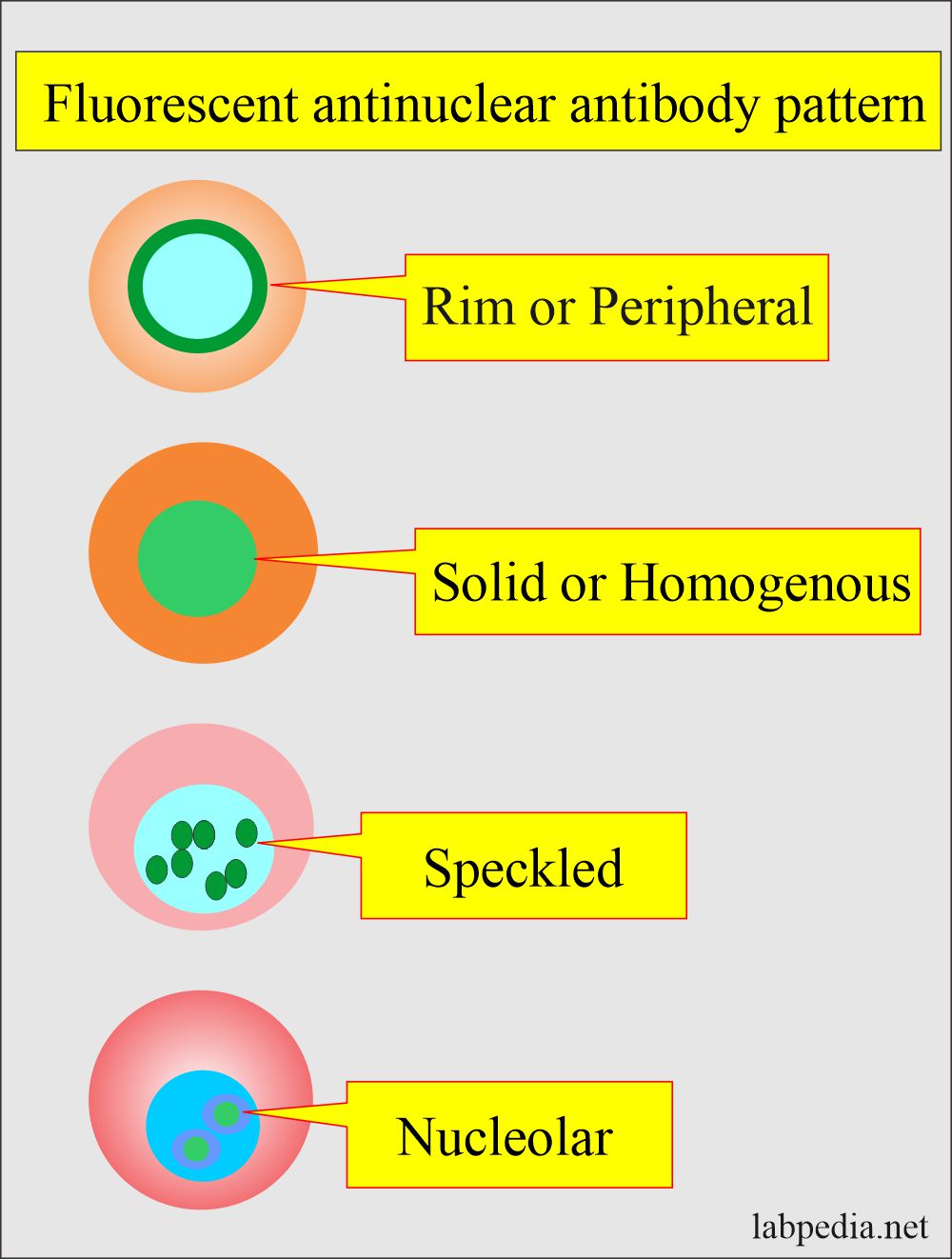
Antinuclear Factor (ANF), Antinuclear Antibody (ANA) and Its
Web Results 13,845 Patients With An Ana During The Study Period Were Identified.
Relative Risk (Rr) Was Calculated For Diagnostic Categories And Individual Diseases.
Ana Pattern Is Most Commonly Speckled, Followed By Centromeric And Less Commonly.
The 6Th Icap Workshop In 2021 Discussed The Latest Updates And Improvements Of The Icap Classification Chart, Including The Dense Fine Speckled Pattern.
Related Post: