
Capsular Pattern For Shoulder
Capsular Pattern For Shoulder - Web shoulder pain accompanied by a marked decrease in range of motion is the chief characteristic of adhesive capsulitis. Signs and symptoms typically begin slowly, then get worse. Pain is described as a poorly localized, dull ache, and may radiate into. Web for example in frozen shoulder, the pathology site is the rotator interval capsule which is on the anterior aspect of the capsule and the typical presentation is the capsular pattern restriction with external rotation being maximally restricted followed by. Web patients with frozen shoulder commonly present with rom restrictions in a capsular pattern. Adhesive capsulitis has a prevalence. Over time, symptoms get better, usually within 1 to 3 years. Web the hallmark sign of frozen shoulder, also known as adhesive capsulitis, is the inability to move your shoulder—either on your own or with the help of someone else. Scar tissue forms, leaving less room for the upper arm to move around. For example in the shoulder joint in case of subacromial bursitis, abduction may be restricted but with minimal restriction in rotation component of joint. Other joints exhibit different patterns. Web the common capsular pattern of limitation has historically been described as diminishing motions with external shoulder rotation being the most limited, followed closely by shoulder flexion, and internal rotation. Web the hallmark sign of frozen shoulder, also known as adhesive capsulitis, is the inability to move your shoulder—either on your own or with the help of someone else. Web adhesive capsulitis, also known as frozen shoulder, is a condition associated with shoulder pain and stiffness. Web for example in frozen shoulder, the pathology site is the rotator interval capsule which is on the anterior aspect of the capsule and the typical presentation is the capsular pattern restriction with external rotation being maximally restricted followed by. Describe the diagnostic approach for evaluating adhesive capsulitis. Web adhesive capsulitis, also known as frozen shoulder, is an inflammatory condition characterized by shoulder stiffness, pain, and significant loss of passive range of motion. Web frozen shoulder, also called adhesive capsulitis, involves stiffness and pain in the shoulder joint. For example in the shoulder joint in case of subacromial bursitis, abduction may be restricted but with minimal restriction in rotation component of joint. A capsular pattern is a proportional motion restriction unique to every joint that indicates irritation of the entire joint. Adhesive capsulitis has a prevalence. A clinician should be aware about the joint limitation that exists but isn't capsular in nature. Lack of use causes your shoulder capsule to thicken and become tight, making your shoulder even more difficult to move — it’s “frozen” in its position. Web for example, the shoulder's capsular pattern is as follows: For example in. Web adhesive capsulitis, also known as “frozen shoulder”, is a common shoulder condition characterized by pain and decreased range of motion in a capsular pattern (external rotation is more limited than abduction, which is more limited than internal rotation). Describe the diagnostic approach for evaluating adhesive capsulitis. A capsular pattern is a proportional motion restriction unique to every joint that. Web adhesive capsulitis, also known as “frozen shoulder”, is a common shoulder condition characterized by pain and decreased range of motion in a capsular pattern (external rotation is more limited than abduction, which is more limited than internal rotation). Web adhesive capsulitis, also known as frozen shoulder, is an inflammatory condition characterized by shoulder stiffness, pain, and significant loss of. Web for example, the shoulder's capsular pattern is as follows: It is a common shoulder ailment that is marked by pain and a loss of range of motion, particularly in external rotation. Clinicians should assess for impairments in the capsuloligamentous complex and musculotendinous structures surrounding the shoulder complex when a patient presents with shoulder pain and mobility deficits (adhesive capsulitis).. Web the hallmark sign of frozen shoulder, also known as adhesive capsulitis, is the inability to move your shoulder—either on your own or with the help of someone else. The condition develops in three stages. Adhesive capsulitis has a prevalence. A clinician should be aware about the joint limitation that exists but isn't capsular in nature. Web adhesive capsulitis, also. Web frozen shoulder, or adhesive capsulitis, describes the common shoulder condition characterized by painful and limited active and passive range of motion (rom). A clinician should be aware about the joint limitation that exists but isn't capsular in nature. Web summarize the pathophysiology of frozen shoulder/adhesive capsulitis. For optimal shoulder stabilisation, the dynamic stabilisers must function efficiently and synergistically. Web. Clinicians should assess for impairments in the capsuloligamentous complex and musculotendinous structures surrounding the shoulder complex when a patient presents with shoulder pain and mobility deficits (adhesive capsulitis). A clinician should be aware about the joint limitation that exists but isn't capsular in nature. Pain is described as a poorly localized, dull ache, and may radiate into. Web adhesive capsulitis,. Review treatment and management options for patients with frozen shoulder/adhesive capsulitis. Clinicians should assess for impairments in the capsuloligamentous complex and musculotendinous structures surrounding the shoulder complex when a patient presents with shoulder pain and mobility deficits (adhesive capsulitis). Web for example, the shoulder's capsular pattern is as follows: Pain is described as a poorly localized, dull ache, and may. Other joints exhibit different patterns. Signs and symptoms typically begin slowly, then get worse. For example in the shoulder joint in case of subacromial bursitis, abduction may be restricted but with minimal restriction in rotation component of joint. 1 adhesive capsulitis is predominantly an idiopathic condition and has an. Review treatment and management options for patients with frozen shoulder/adhesive capsulitis. Review treatment and management options for patients with frozen shoulder/adhesive capsulitis. Other joints exhibit different patterns. Web patients with frozen shoulder commonly present with rom restrictions in a capsular pattern. Clinicians should assess for impairments in the capsuloligamentous complex and musculotendinous structures surrounding the shoulder complex when a patient presents with shoulder pain and mobility deficits (adhesive capsulitis). Web the. Web adhesive capsulitis, also known as frozen shoulder, is an inflammatory condition characterized by shoulder stiffness, pain, and significant loss of passive range of motion. For optimal shoulder stabilisation, the dynamic stabilisers must function efficiently and synergistically. Lack of use causes your shoulder capsule to thicken and become tight, making your shoulder even more difficult to move — it’s “frozen” in its position. Adhesive capsulitis has a prevalence. Web the hallmark sign of frozen shoulder, also known as adhesive capsulitis, is the inability to move your shoulder—either on your own or with the help of someone else. Web the condition is called “frozen” shoulder because the more pain you feel, the less likely you’ll use your shoulder. Web frozen shoulder, or adhesive capsulitis, describes the common shoulder condition characterized by painful and limited active and passive range of motion (rom). Web adhesive capsulitis, also known as “frozen shoulder”, is a common shoulder condition characterized by pain and decreased range of motion in a capsular pattern (external rotation is more limited than abduction, which is more limited than internal rotation). Web shoulder pain accompanied by a marked decrease in range of motion is the chief characteristic of adhesive capsulitis. Other joints exhibit different patterns. Web patients with frozen shoulder commonly present with rom restrictions in a capsular pattern. Web adhesive capsulitis (also known as frozen shoulder) is a condition of the shoulder characterized by functional loss of both passive and active shoulder motion commonly associated with diabetes, and thyroid disease. Over time, symptoms get better, usually within 1 to 3 years. Web frozen shoulder, also called adhesive capsulitis, involves stiffness and pain in the shoulder joint. It is a common shoulder ailment that is marked by pain and a loss of range of motion, particularly in external rotation. Describe the diagnostic approach for evaluating adhesive capsulitis.
What Is Capsular Pattern Of Shoulder Margaret Greene Kapsels
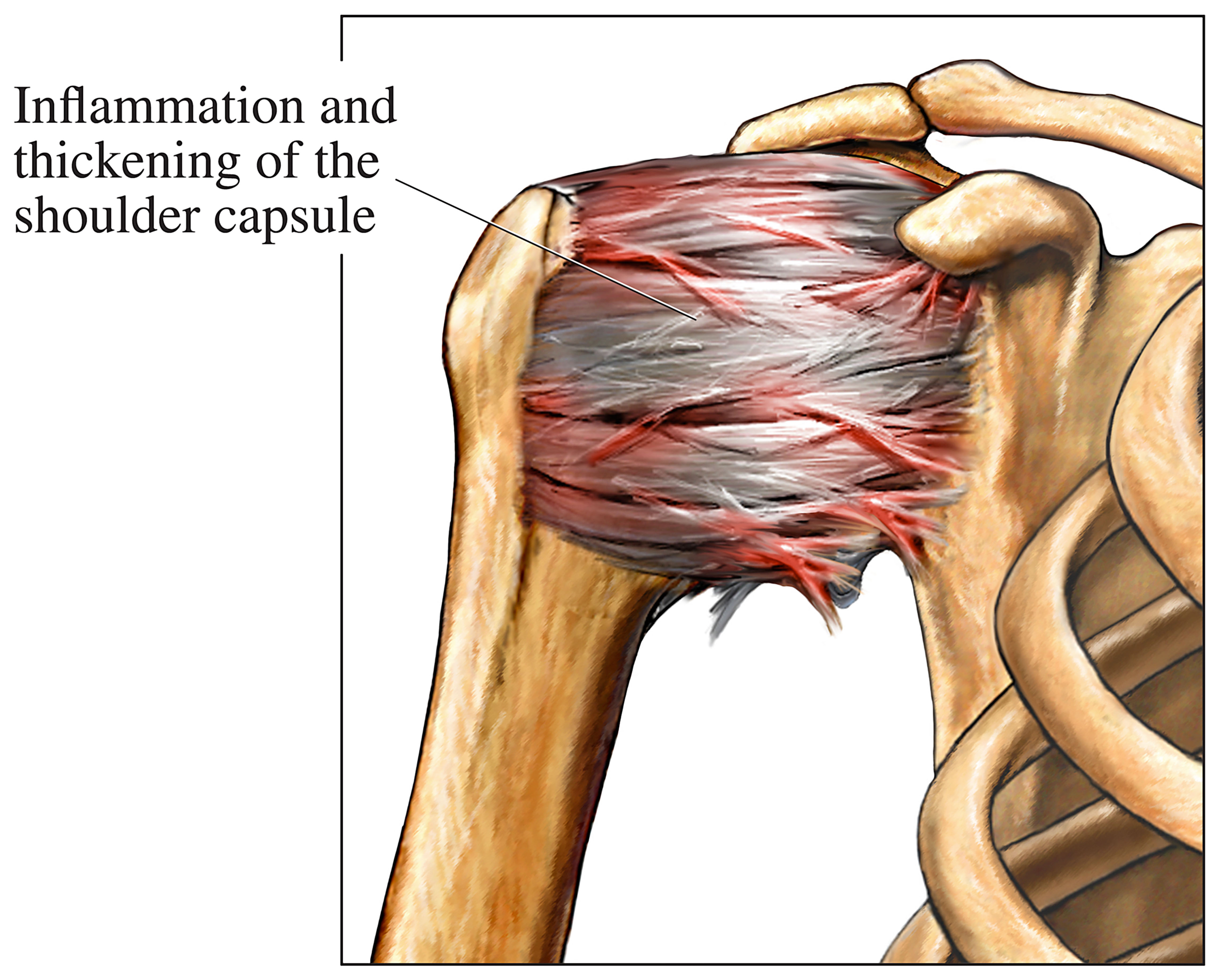
Adhesive Capsulitis of the Shoulder Therapists in Galway Therapists

Capsular Pattern Of Shoulder sharedoc

Mr Paul Jarrett Adhesive Capsulitis / Frozen Shoulder Murdoch

Figure 1 from Posterior capsular contracture of the shoulder
Frozen Shoulder Adhesive Capsulitis OrthoInfo AAOS

Frozen shoulder Adhesive capsulitis of the shoulder
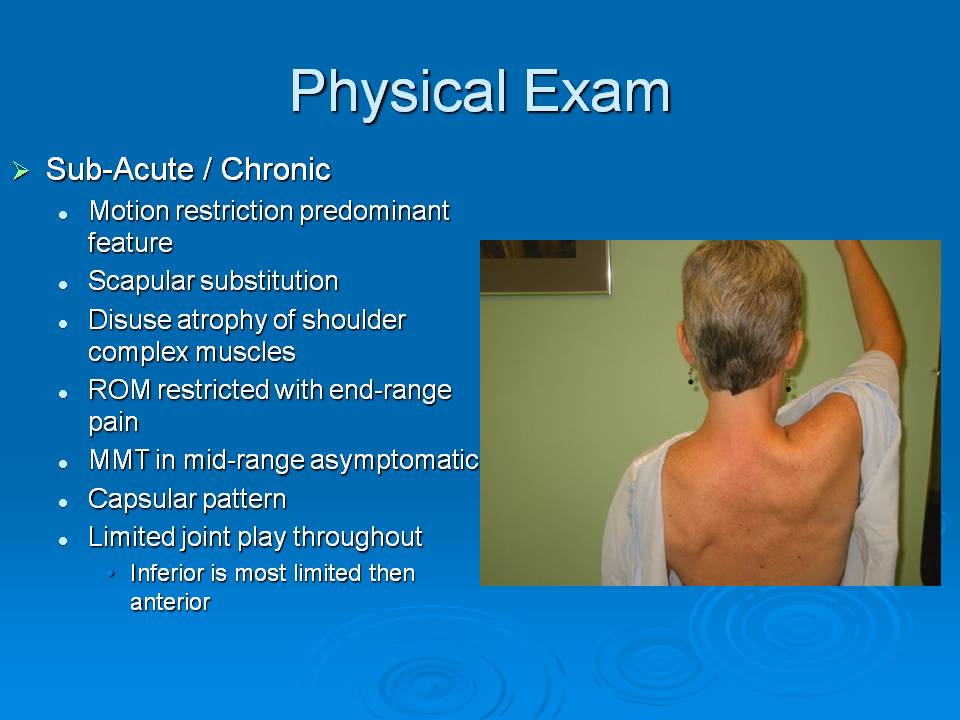
Capsular pattern of the shoulder labquiz
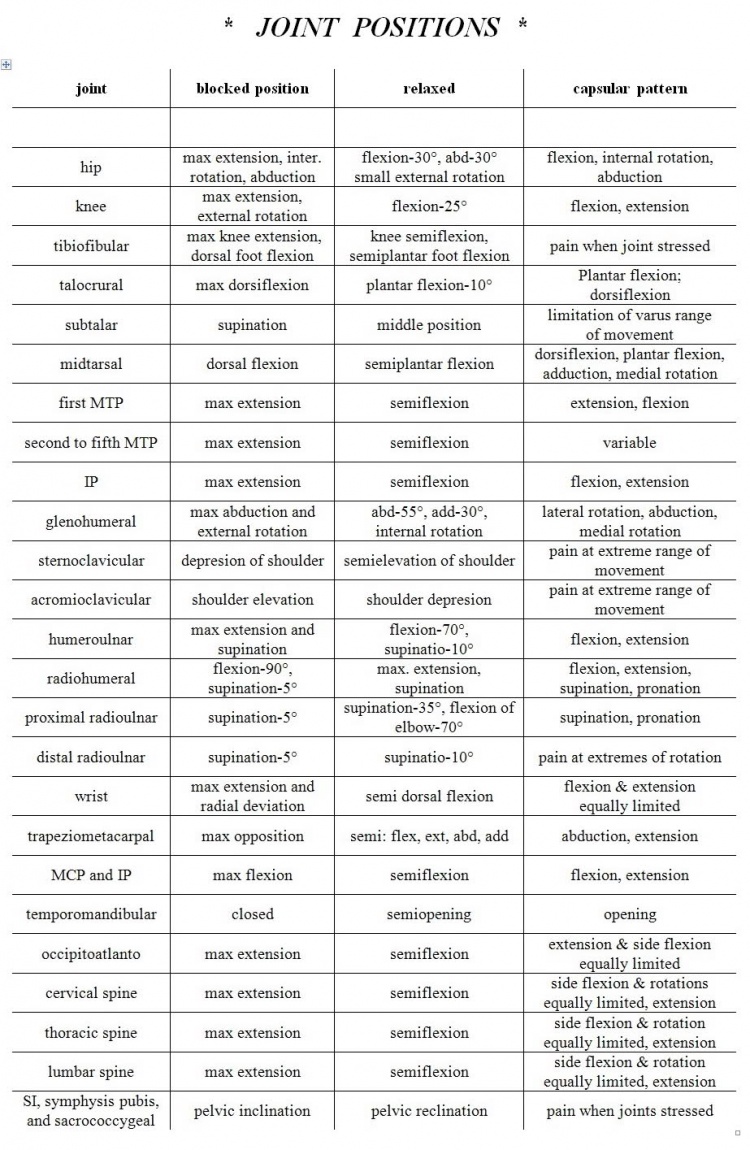
Capsular and Noncapsular Patterns Physiopedia

capsular pattern shoulder YouTube
Web Also Known As “Frozen Shoulder,” Adhesive Capsulitis (Ac) Is An Insidious Inflammatory Condition Characterized By A Painful, Gradual Loss In Passive Or Active Glenohumeral Range Of Motion (Rom) Resulting From Progressive Fibrosis And Ultimate Contracture Of The Glenohumeral Joint Capsule.
Web Patients Present With Constant Shoulder Pain And Range Of Motion (Rom) Limitations In A Capsular Pattern (External Rotation (Er)> Abduction (Abd)> Flexion (Flx)> And Internal Rotation (Ir)).
Web For Example, The Shoulder's Capsular Pattern Is As Follows:
Web The Common Capsular Pattern Of Limitation Has Historically Been Described As Diminishing Motions With External Shoulder Rotation Being The Most Limited, Followed Closely By Shoulder Flexion, And Internal Rotation.
Related Post: